Dermatome Patterns
Dermatomal Patterns help physicians define nerve radiculopathy patterns. Most neurologists/spine specialists accept certain associated sensation, muscle strength, and reflex changes patterns to specific nerve roots.
L5 radiculopathy is typically associated with weakness of the extensor hallucis longus muscle. That is the muscle that allows the great toe to point upwards. L5 radiculopathy also follows a dermatomal pattern associated with the front of the foot. There are no reflexes associated with L5.
SI radiculopathy is associated with weakness of the gastrocnemius muscle. That is the muscle that allows a person to step on their tip toes. S1 radiculopathy follows a dermatomal pattern associated with the outer heel, and back of the calf.
But, as physicians, we know that there can be considerable overlap in the sensation changes associated with each of these dermatomes.
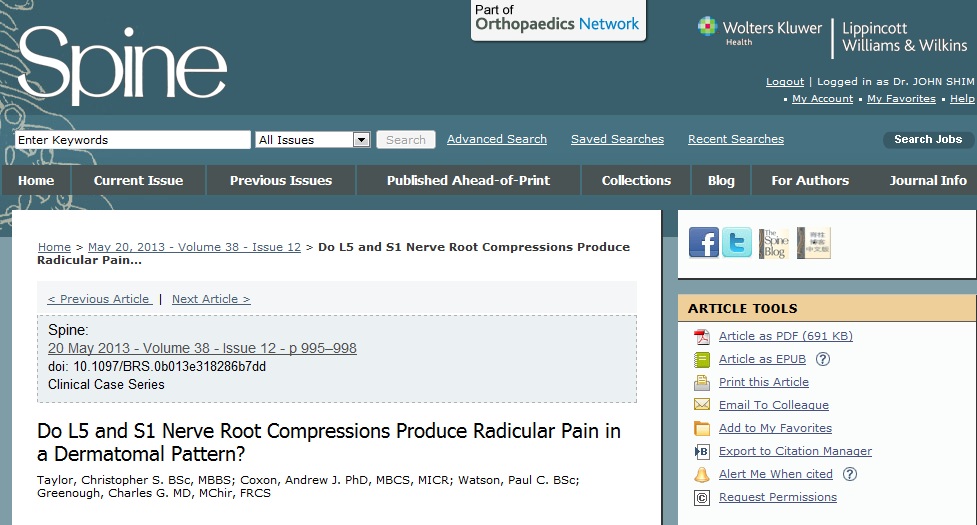
In the above study published in SPINE, the authors mapped out the distribution of pain and pins and needles patterns in patients with known disk herniations causing specific entrapment of either the L5, or the S1 nerve.
After mapping the sensation patterns of these patients, the authors came to the conclusion that patient report is an unreliable method of identifying the anatomic source of pain or paresthesia by nerve root compression.
The results read “There is a substantial overlap of the dermatomes with most patients indicating pain or pins or needles in more than the dermatomal area. In addition, the distribution of pain and pins and needles did not correspond well with dermatomal patterns.”
Clinicians know this statement to be true. As I explain to patients, “I guess your S1 nerve did not read the anatomy book”, as the pattern was not consistent.
In my opinion, dermatomal patterns are helpful to establish the presence of a radiculopathy. But, as the author concludes, these dermatome patterns do not always exactly follow the pattern. But, while I appreciate the fact that there is deviations of the dermatome patterns, what I do look for is a pattern. For patients that have global pain to one extremity, it is likely that that global loss of sensation, or pain, is secondary to non-dermatomal issues such as neuropathy, cord compression, or non-physical matters.
Last modified: January 5, 2018