Getting a Spine MRI Can Increase Your Chances of Future Surgery, Even After Your Pain Is Gone
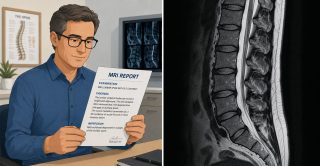
A closer look at an underappreciated consequence of early imaging — and what it means for your long-term spine health. What Most Patients Are Never Told About Spine MRIs Every year, millions of patients with back or neck pain undergo MRI studies. For many, the pain resolves on its own within weeks or months. It […]
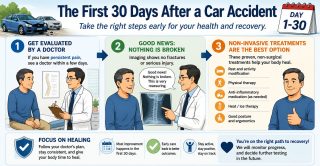
Why an Evaluation for Pain After a Minor Auto Accident May Differ From an Evaluation for Everyday Pain
Today, I want to talk about something that comes up often in my practice: why a medical evaluation for back or neck pain after a car accident can look and feel different from an evaluation for pain that develops from everyday life, like gardening, lifting at work, or simply waking up stiff. The underlying spine […]
Steroid Injections for Spine Pain: What’s Rarely Discussed About the Risks
Do you know the risks of an injection?
Engineered for Survival: How 60 Years of Vehicle Safety Advances Changed Spine Injuries After Rear-End Crashes
Today, I want to talk about something that comes up often in my practice: how dramatically the nature of spine injuries from rear-end car crashes has changed since I started practicing in the early 1990s, and how much further back the real transformation began. When people picture a “whiplash injury,” they often imagine the same […]
A Normal Lumbar MRI Is a Rare Finding for Anyone Older Than 40
By John H. Shim, MD, FAAOS | Orthopaedic Spine Surgeon | ShimSpine.com If you are over the age of 40 and your lumbar MRI comes back showing degenerative changes, disc bulges, or mild arthritis — welcome to the club. You are, statistically speaking, perfectly normal. In fact, a completely “clean” lumbar MRI in a middle-aged […]
Back pain, neck pain, and disc problems start not from a dramatic injury, but from hours in a chair.
The Spine Was Not Built for the Chair The human spine evolved for movement; for walking, bending, lifting, and carrying. When you sit for extended periods, especially with poor posture, the compressive load on your lumbar discs increases significantly. Research by Nachemson and others has shown that intradiscal pressure is actually higher during sitting than […]