Chiropractor or Physical Therapist? Understanding the Differences
Today, I want to talk about a question patients ask me all the time: should I see a chiropractor or a physical therapist? Both professions treat spinal and musculoskeletal pain, but they come from different educational traditions, philosophies of care, and practice models. Understanding these differences can help you choose the right provider, or the right combination of providers, for your particular problem.
Education and Training
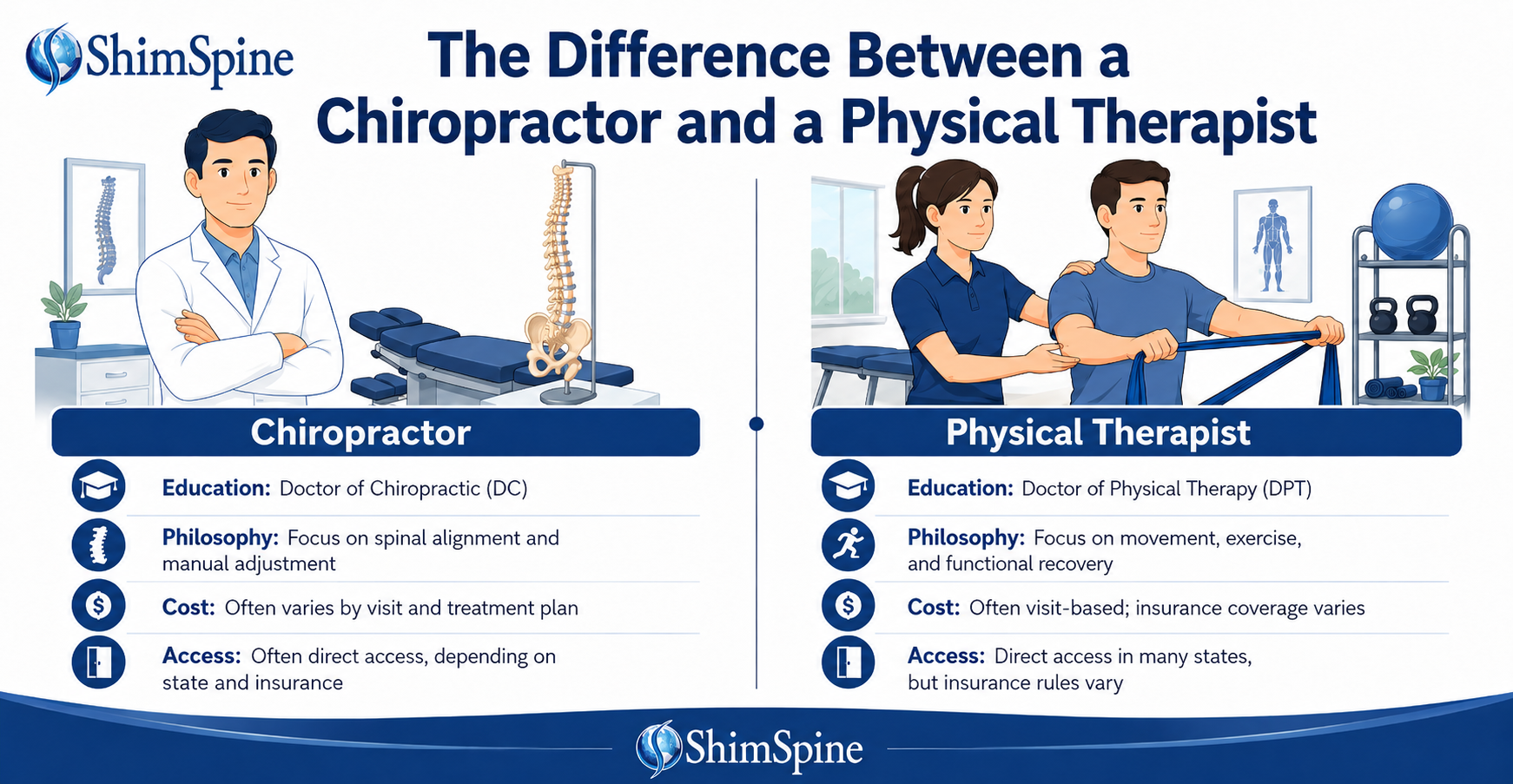
Chiropractors earn a Doctor of Chiropractic (DC) degree, a four-year postgraduate program built on a prior undergraduate degree, totaling roughly 4,200 to 4,800 hours of combined classroom and clinical training, with heavy emphasis on spinal biomechanics, radiographic interpretation, and manual adjustment technique. Graduates must pass the four-part National Board of Chiropractic Examiners exam before state licensure.
Physical therapists earn a Doctor of Physical Therapy (DPT), typically a three-year postgraduate program following a bachelor’s degree, with coursework centered on exercise physiology, neuromuscular rehabilitation, and functional movement, plus extensive supervised clinical rotations across hospital, outpatient, and sports settings. Licensure requires passing the National Physical Therapy Examination (NPTE).
Both are doctoral-level clinicians, but the training diverges early: chiropractic education centers on spinal manipulation as a primary treatment tool, while physical therapy education centers on active, exercise-based rehabilitation and movement retraining across the whole body.
Philosophy on the Need for Treatment
The two professions also differ in underlying philosophy. Traditional chiropractic theory holds that spinal misalignment can affect nerve function and overall health, and that periodic adjustment can correct this even without symptoms, a belief that varies widely from one chiropractor to the next, with many modern practitioners taking a more conservative, symptom-driven approach similar to physical therapy.
Physical therapy is generally organized around a specific functional impairment: pain, weakness, or limited range of motion tied to a diagnosis. Treatment is typically episodic, care is directed toward measurable functional goals, and the patient is discharged once those goals are met or progress plateaus.
The Concept of Maintenance Care
This philosophical difference is most visible in the idea of “maintenance care.” Many chiropractic practices offer ongoing, scheduled adjustments, weekly or monthly, intended to preserve alignment and prevent recurrence, independent of active symptoms. This indefinite, wellness-oriented model is far more common in chiropractic than in physical therapy.
Physical therapy, by contrast, rarely keeps patients on an open-ended treatment schedule. Insurance-based PT is structured around a defined episode of care with a start and an endpoint, though some clinics offer optional wellness or “tune-up” visits outside of insurance-covered rehabilitation.
Practice and Business Models
These philosophies shape how practices typically run. Chiropractic offices are more often small, solo or small-group practices with a cash-and-insurance hybrid model, lower overhead, and, especially early in treatment, higher visit frequency (two to three times weekly). Direct access is standard; patients generally do not need a physician referral to see a chiropractor.
Physical therapy practices vary more widely, from small outpatient clinics to therapy departments embedded within hospital systems or orthopedic and spine surgery practices. Many states allow some direct access to PT, but it is still frequently physician-referred, particularly after surgery or injury, with lower visit frequency (one to two times weekly) and an expected home exercise component between visits.
Relationship With Other Providers
Physical therapists tend to be tightly integrated into a broader care team, communicating directly with referring physicians and surgeons, particularly during post-operative rehabilitation, where therapy protocols must be coordinated with surgical timelines and precautions.
Given the direct-access model, chiropractors more often serve as an independent point of entry into care, though many now practice in integrated, multidisciplinary settings alongside medical doctors. Some spine conditions benefit from both. Regardless of which provider a patient sees first, coordination and information sharing among everyone involved generally leads to a smoother, safer recovery.
What the Cost Typically Buys
Setting aside the inflated “charge master” figures that sometimes appear on itemized bills, the cash-pay and negotiated insurance rates patients actually encounter are lower than many expect. A chiropractic adjustment visit typically runs $50 to $140 (national average near $65), with an initial evaluation around $90 to $160. A physical therapy treatment session typically runs $75 to $150 out of pocket, or a $20 to $60 copay with insurance, with a more involved initial evaluation around $150 to $200.
What that cost buys differs by visit type. A chiropractic visit usually includes a brief history update, a focused exam, and manual treatment; typically an adjustment, sometimes with adjunct modalities like electrical stimulation or soft-tissue work, lasting roughly 10 to 20 minutes. A physical therapy visit usually includes hands-on manual therapy, supervised, progressive therapeutic exercise (often 30 to 60 minutes), and instruction in a home exercise program designed to build capacity between visits, reflecting PT’s more rehabilitation- and strength-focused model of care.
Until next time, this is Dr. Shim.
References
- Southern California University of Health Sciences. Chiropractor vs Physical Therapist: Comparing Educational Paths and Career Outcomes.
- University of St. Augustine for Health Sciences (USAHS). Chiropractor vs. Physical Therapist: Key Differences.
- National Board of Chiropractic Examiners (NBCE). Examination and licensure requirements.
- Federation of State Boards of Physical Therapy (FSBPT). National Physical Therapy Examination (NPTE) overview.
- GoodRx Health. This Is How Much a Chiropractor Typically Costs.
- Hinge Health. Physical Therapy Cost Calculator.
Disclosure: This post reflects general educational information based on Dr. Shim’s clinical experience working alongside chiropractors and physical therapists as part of multidisciplinary spine care. It does not describe any specific patient, practice, or provider, and is not an endorsement or criticism of either profession.
Last modified: August 21, 2026