Understanding Spine Disability Ratings: What the Numbers Actually Mean
Today, I want to talk about something that generates enormous confusion for patients, attorneys, employers, and insurers alike: spine disability ratings. After more than 30 years of evaluating spine conditions, I have found that few medical concepts are more misunderstood or more consequential than the numbers that get attached to a person’s spinal impairment.
What Is a Disability Rating?
A disability rating, more precisely called an impairment rating, is a physician-assigned percentage that attempts to quantify the permanent, measurable loss of function resulting from a medical condition or injury. It is important to understand the distinction: impairment is a medical concept (loss of a body part’s normal function), while disability is a legal and vocational concept (how that impairment affects a person’s ability to work or perform daily activities). A physician rates impairment. Courts, administrative bodies, and vocational experts can translate that into disability.
The AMA Guides: The Standard Framework
In many jurisdictions, spine impairment ratings are assigned using the American Medical Association (AMA) Guides to the Evaluation of Permanent Impairment. Currently in its Sixth Edition, the Guides provide a structured methodology for rating conditions of the cervical, thoracic, and lumbar spine. The rating takes into account diagnosis, neurological findings, and functional history. The Guides give the physician considerable leeway, recognizing that clinical judgment is critical to the impairment rating. Different editions of the Guides can yield markedly different ratings for identical clinical findings, a fact frequently contested in legal proceedings. Some states mandate a specific edition; others leave it to the evaluating physician. This inconsistency is a known limitation of the current framework. In my opinion, this inconsistency, and the method by which the guideline was created, do not make it authoritative.
What Goes Into a Spine Rating
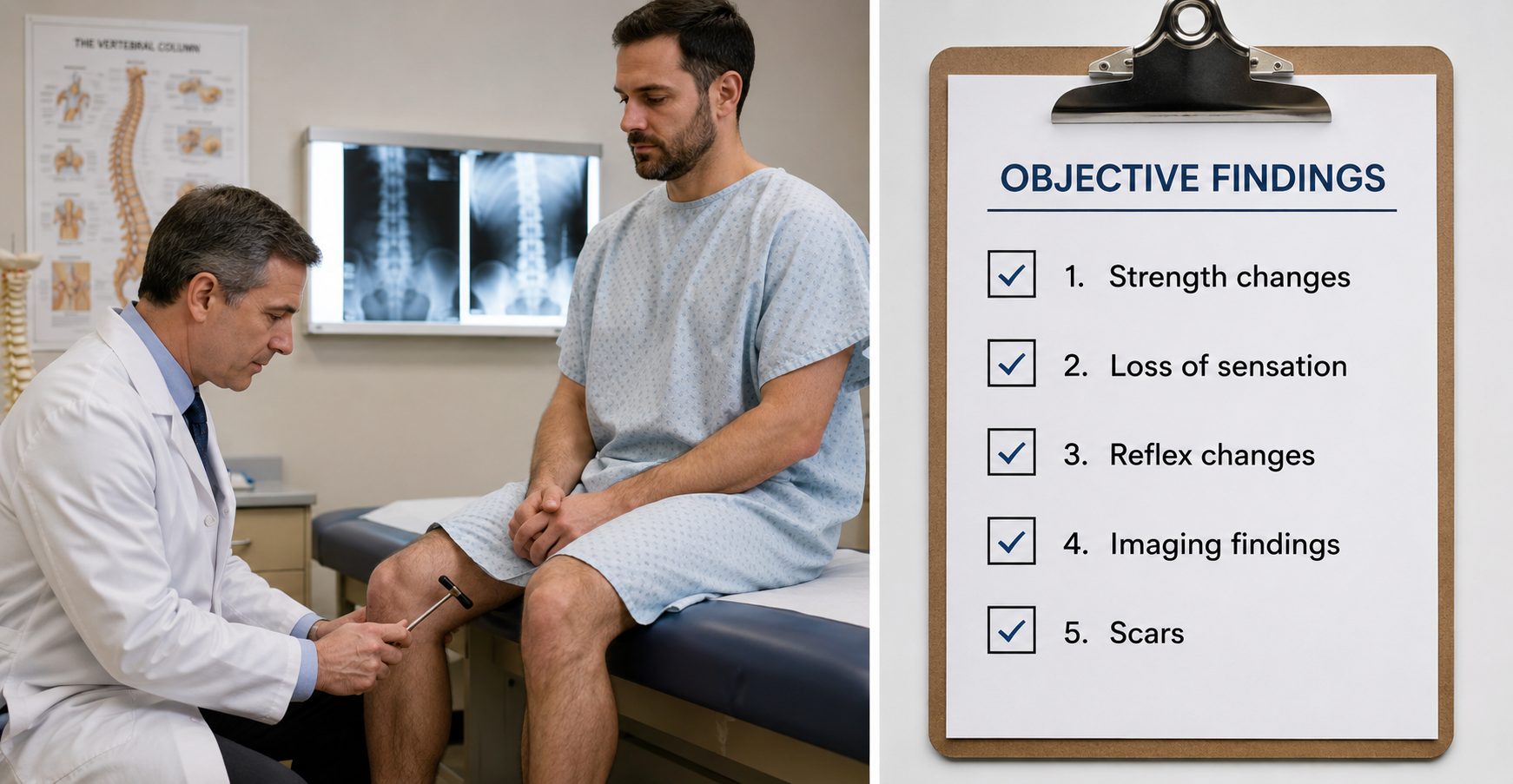
A proper spine impairment evaluation includes a thorough history, physical examination, review of imaging, and assessment of neurological function. Key factors that influence the rating include the presence of a surgically treated disc herniation, confirmed radiculopathy with objective findings, and evidence of instability or fusion. Subjective pain reports alone do not yield an impairment rating for musculoskeletal conditions under the AMA Guides; objective clinical or imaging findings are required. This is a point that surprises many patients. Few know that the latest AMA guideline does not consider Range of Motion a major factor in determining impairments because of measurement inconsistency and the effort required to identify a reproducible spinal range of motion.
Whole Person Impairment vs. Regional Impairment
Ratings are typically expressed as a percentage of the whole person rather than as a percentage of the spine alone. For example, a lumbar disc herniation treated with a single-level fusion might yield a whole person impairment (WPI) of 10–13% under the Sixth Edition. That does not mean the patient is 10% disabled in the workplace; that determination requires additional vocational and functional analysis. A 10% WPI in a sedentary office worker carries very different implications than the same rating in a construction laborer.
Why Ratings Are Contested
Impairment ratings are among the most frequently disputed elements in workers’ compensation and personal injury cases. Two equally qualified physicians examining the same patient can arrive at different ratings based on which edition of the Guides they use and how they classify the diagnosis. This variability is not fraud; it reflects the inherent subjectivity in converting clinical findings into numerical values. A second opinion or Independent Medical Examination (IME) is often sought precisely to challenge or confirm an initial rating.
Whether you are a patient trying to understand your own evaluation, an attorney reviewing a claim, or an employer managing a workers’ compensation case, understanding what a spine disability rating is, and is not, leads to better decisions for everyone involved. Until next time, this is Dr. Shim.
References
- American Medical Association. Guides to the Evaluation of Permanent Impairment, 6th Edition. Chicago: AMA Press; 2008.
- Rondinelli RD, Genovese E, Brigham CR, et al. AMA Guides to the Evaluation of Permanent Impairment, Sixth Edition. Spine. 2012;37(10):834–843.
- Turk DC, Melzack R, eds. Handbook of Pain Assessment, 3rd ed. New York: Guilford Press; 2011.
- Social Security Administration. Disability Evaluation Under Social Security, Section 1.15: Disorders of the Spine. SSA Blue Book. https://www.ssa.gov/disability/professionals/bluebook/ (accessed May 2026).
- Robinson JP, Turk DC, Loeser JD. Pain, impairment, and disability in the AMA Guides. J Law Med Ethics. 2004;32(2):315–326.
- Genovese E, Galper JS, eds. Guide to the Evaluation of Functional Ability. Chicago: AMA Press; 2009.
- Collie A, Lane TJ, Hassani-Mahmooei B, Thompson K, McLeod C. Does time off work after injury vary by jurisdiction? A comparative study of eight Australian workers’ compensation systems. BMJ Open. 2016;6(5):e010910.
Disclosure: This blog is for general educational and informational purposes only. It does not constitute legal or medical advice. Dr. Shim provides opinions as an experienced orthopaedic spine surgeon with medical-legal expertise since 1994. Content is presented without bias toward plaintiff or defendant interests. ShimSpine.com is self-funded and accepts no paid advertising.
Last modified: June 22, 2026